Chimney Flashing Repair in The Crossings, Florida
Chimney Flashing Repair in The Crossings from a family-owned company based about 6 miles away in Pinecrest.
- Family-Owned & Operated
- Free Written Estimates
- Upfront Pricing
- Same-Day Service Available

Pinecrest Chimney handles chimney flashing repair for The Crossings the way a neighbor would, because our home base sits just a few miles down the road. This part of Miami-Dade punishes brick and mortar with humidity and storm rain, so our advice always starts there. Before we leave, you'll know exactly what we saw, which items need attention now, and which ones can safely ride until next year.
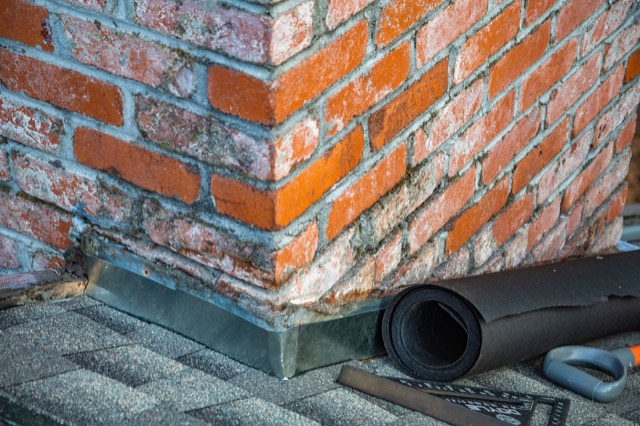
Of all the system's components, the flashing at the roof penetration fails most often: sealants crack in the sun, wind lifts metal edges, and re-roofing shortcuts leave the joint dependent on caulk. We repair and rebuild that transition with step flashing woven course by course, counter-flashing seated in the mortar, and saddles where runoff needs to be split, so wind-driven rain stays out of your framing for good.
Evening loops around the lakes are practically a resident ritual here. The Crossings is a 1970s-80s master-planned mix of single-family houses and townhomes threaded with lakes and greenbelts. Trees planted at the community's founding have matured into real canopy over its walking paths. It's the single biggest factor we plan around when we take on chimney flashing repair in The Crossings.
What Chimney Flashing Repair Looks Like in The Crossings
Even Miami-Dade's so-called dry season would count as humid almost anywhere else, so The Crossings masonry never truly dries out, and steady dampness degrades mortar more reliably than the occasional cool night ever could. Chimney care down here can't be borrowed from northern manuals. It has to be written around water, because water is the whole story. It's a detail out-of-town outfits miss, and one The Crossings homeowners feel first.
A heavy canopy is one of The Crossings' best features, and among the most persistent neighbors a chimney can have. Branches overhanging the roofline drop debris with every gust, and shade holds dampness in the brickwork well after the rain has moved on. Both are manageable; ignored, both get expensive. For chimney flashing repair calls in The Crossings, that backdrop is usually where the story starts.
Concrete block with a masonry chimney is the signature construction of south Miami-Dade, and it ages in predictable ways: hairline crown cracks, veneer brick spalling at the faces, mortar washing out near the roofline. Knowing the pattern means we rarely have to guess about what a Crossings chimney needs, the era tells us where to look first. It shapes both what we check and what we recommend for chimney flashing repair here in The Crossings.
What Our Chimney Flashing Repair Covers
- Removal of failing tar and caulk patches
- Salt-air-resistant metal upgrades
- Weather-rated sealant renewal
- Step flashing replacement, woven per course
Because our routes never stray far from south Miami-Dade, a Crossings appointment is a promise we can actually keep. Call to arrange chimney flashing repair and you'll get a real, confirmed time window, and a company close enough to honor it even when the week gets complicated.
You'll never discover a surprise line item halfway through a project with us. The full scope is priced and approved upfront, holds steady through completion, and finishes under the protection of our workmanship warranty. In writing at the start, stood behind at the end.
Chimney Flashing Repair nearby: we also serve Three Lakes, Kendale Lakes, Kendall, The Hammocks, Richmond Heights, Country Walk.
A Closer Look


Chimney Flashing Repair in The Crossings, handled.
Free written estimate · Upfront pricing · Same-day service available
Frequently Asked Questions
How do I know it is the flashing and not the crown or cap?
Location and timing tell the story. Flashing leaks typically stain the ceiling tight against the chimney and appear during blowing rain, while crown and cap failures tend to show up inside the flue or firebox first. We test the full stack top to bottom so the entry point is confirmed, not assumed.
How long does chimney flashing last in South Florida?
Less time than the same metal lasts inland. UV, daily heat cycling, and salt-carrying air shorten the life of both the sealants and cheaper galvanized steel. Quality metal, correctly installed, still gives you many years, but any flashing here deserves a look whenever the roof or chimney is being serviced.
Do you handle chimney flashing repair throughout The Crossings?
Yes. The Crossings is part of our core Miami-Dade County service area, and same-day visits are often available. Call (786) 462-9144 and we will give you an honest arrival window.
Do chimneys in The Crossings really need attention in a warm climate?
They do. Warmth was never the enemy. In The Crossings the chimney's real adversaries are rain, salt-tinged humidity, and half a year of storm winds, all working on the masonry and metal whether or not a fire ever burns. Even a fireplace used a handful of evenings each winter depends on a dry, structurally sound stack the other 350 days.
Why Flashing Is an Assembly, Not a Product
Flashing that works is two overlapping layers. Step flashing goes under each course of roofing and turns up the masonry; counter-flashing is cut into a mortar joint and laps down over it. Neither does the job alone, and sealant smeared across the junction is not a substitute for either.
Reglet depth decides whether the counter-flashing stays put. Cut too shallow and it works loose in the first storm season; cut into the brick instead of the joint and you have weakened the unit. We cut the joint, set the metal, and seal the reglet rather than the whole seam.
The failure signature is specific: water only after wind-driven rain, and often only from one direction. A leak that shows up twice a year is still a leak, and it is usually flashing rather than the crown.
Roof type changes the detail more than people expect. On barrel tile the flashing has to weave through the pans rather than lie on top of them, and a flashing job executed as though the roof were shingle leaks at the first storm regardless of how much sealant went in.
It also decides scope. Where tile has to come up for the work to be done properly, that is roofing alongside masonry, and we say so before starting rather than doing half a job that looks finished from the ground.
What The Crossings' Distance From the Water Changes
The Crossings is about 7 miles inland from Biscayne Bay, far enough that salt stops being the headline and humidity takes over. Chloride still arrives on a strong easterly, but the constant here is moisture that never fully leaves the masonry.
That distance is the single biggest thing deciding which metal is allowed on the roof when we quote chimney flashing repair here, because the product approval has to be listed for the High Velocity Hurricane Zone. It is the reason two chimneys of the same age, built the same way, need different work depending on which side of Miami-Dade County they stand on.
If you are placing it, The Crossings is the stretch around the SW 117th Avenue corridor and its neighborhood lakes. Our base is about 6 miles away in Pinecrest, and Three Lakes, Kendale Lakes and Kendall are the closest communities to The Crossings that we also cover, so a second visit here is a short drive rather than an expedition.
What that means practically: when we quote chimney flashing repair in The Crossings we price what this exposure actually does to a chimney, not a national average. A specification that makes sense fifteen miles inland can be the wrong answer here, and the reverse is just as true.
Weighing whether to look now or wait? At 7 miles out, the exposure answers that for you. The Crossings damage compounds on a schedule set by how much salt and moisture reach the stack, and the cheapest chimney flashing repair anybody books is the one booked before the water has finished finding its way in. A written estimate costs nothing and tells you which version of the job you are looking at.
Hiring for Chimney Flashing Repair in The Crossings: Six Things to Ask
Search for chimney flashing repair from a Crossings address and you get a page of results, most of which are nowhere close to you. Some are lead brokers who will sell your number on. Some are franchises whose nearest van is in another county. A few are actually local. Telling them apart takes about two minutes on the phone.
Ask where they are based, and listen for a place rather than a region. We are in Pinecrest, about 6 miles from The Crossings, and Three Lakes and Kendale Lakes are its nearest neighbors on our map. That is a checkable answer. "We serve all of South Florida" is not.
Ask whether the estimate is written on site by someone who has looked at the chimney. A price given without a look is a sales document, and on a Crossings roof the scope tends to move once somebody is actually up there.
For chimney flashing repair specifically, ask whether the tile is coming up. On a tile roof, flashing done without lifting tile is sealant with a longer invoice, and the answer tells you in one sentence whether somebody has actually looked or is reading off a price list.
Ask for the chimney flashing repair estimate in writing before anything begins. Not a number over the phone and not a figure on the back of something. A written scope is what turns a change order into a conversation rather than a surprise, and it costs nothing to ask for.
Finally, ask what happens if they find something worse once they are on the roof. Every Crossings chimney hides its condition until something comes apart, so the honest answer is never "that will not happen". It is an agreement on how it gets priced when it does.
Your Crossings team, based in Pinecrest
Our base is in Pinecrest, about 6 miles from The Crossings. That is the whole pitch: we are near enough that a same-day look is realistic and a callback never turns into a road trip.
Call about your Crossings home and a real person answers. The estimate is written on site by the person who comes out, and nobody quotes a job they have not looked at. We are family-owned, a real person answers the phone, and every visit starts with a free written estimate.
Helpful Local Guides
All guides →Chimney Flashing Leaks: Tile, Flat and Shingle Roofs
Where a chimney passes through a roof, two structures that move differently have to share a…
Read →GuideFlorida Chimney Code in Miami-Dade: What's Required
Almost every chimney argument in south Miami-Dade has a written answer: how tall it has to be…
Read →GuideCracks in a Stucco Chimney Chase: Which Ones Matter
A lot of chimneys in this part of Miami-Dade are not masonry at all. They are a framed box…
Read →