Chimney Flashing Repair & Replacement in Pinecrest
No spot on the house takes more water than the junction of chimney and roof. We repair and rebuild that transition so it sheds every storm.
- Family-Owned & Operated
- Free Written Estimates
- Upfront Pricing
- Same-Day Service Available
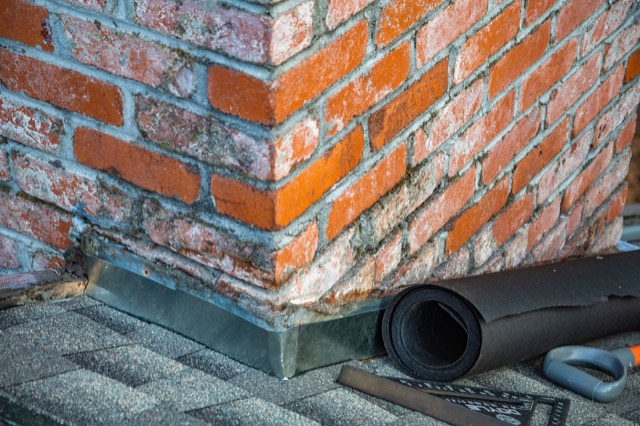
Flashing is the layered metal system spanning the seam between chimney and roof, the single most leak-prone transition on a Pinecrest home. Built correctly, it works in two parts: step flashing woven into each shingle course to carry water down the roof plane, and counter-flashing let into the stack's mortar joints to shield the step pieces from above. When either layer fails: lifted by wind, split by age, or smeared over with roofing tar as a shortcut, rainwater slides behind the metal and into the framing. Most of the 'roof leaks' we are called about start exactly here.
The repair we propose follows from what failed. Loose counter-flashing gets re-secured into a freshly cut reglet and sealed so it cannot back out again. Corroded or improperly lapped step flashing is replaced piece by piece, woven into the surrounding shingles the way it should have been originally. Where a wide chimney meets the roof on its uphill side, we can add a saddle to split the water flow instead of letting it pond against the masonry. And when a previous owner's tar patch is holding on by habit, we strip it out and rebuild the transition in metal, because sealant alone is a countdown, not a fix.
A Closer Look
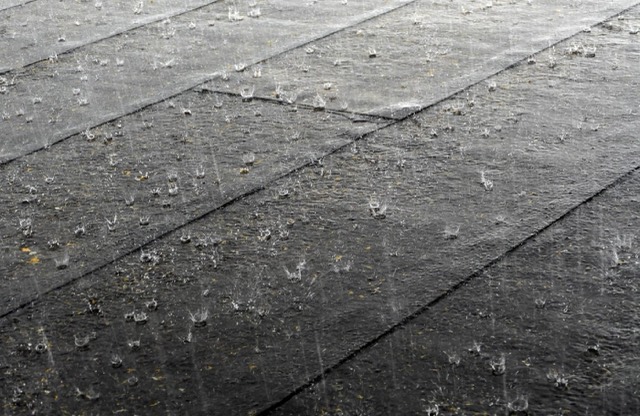


Roofline Transitions Take a Beating in South Florida
Flashing in Pinecrest fights three enemies at once. Relentless UV bakes the sealants at the counter-flashing joint until they crack and shrink. Daily thermal swings, a roof surface that scorches by afternoon and cools fast under an evening storm. Work the metal back and forth until fasteners loosen. And the salt haze that drifts a few miles inland from Biscayne Bay slowly corrodes cheaper galvanized steel, opening pinholes right where water concentrates. That is why we specify corrosion-resistant metal and high-grade sealants on every flashing job here; materials that hold up elsewhere do not always hold up on a Miami-Dade roof.
Hurricane-force gusts are the other local reality. Wind that gets a fingertip under a lifted flashing edge will peel it like a can lid, and June-through-November storm season gives it plenty of chances. We also see a steady stream of flashing failures that trace back to re-roofing jobs: roofers replace the shingles, reuse tired step flashing, and caulk over the counter-flashing instead of resetting it into the mortar. Two or three rainy seasons later, the ceiling stains start. If your Pinecrest home was re-roofed in the last few years and now shows water near the chimney, flashing is the first thing we check.
What's Included
Step flashing replacement
We replace corroded or badly lapped step flashing piece by piece, weaving each unit into the shingle courses so water is carried down the roof plane, never behind it.
Counter-flashing reset
Loose or surface-mounted counter-flashing is cut into a proper reglet in the mortar joint, locked in place, and sealed at the top edge.
Saddle (cricket) installation
On wide chimneys, we build a peaked saddle on the uphill side so runoff splits around the masonry instead of ponding against it.
Sealant renewal
UV-degraded caulk at flashing joints is stripped and replaced with high-temperature, weather-rated sealant, as maintenance, not as a substitute for sound metal.
Tar patch removal and rebuild
We remove failing roofing-cement patches and rebuild the transition in metal, correcting the shortcut instead of adding another layer to it.
Corrosion-resistant upgrades
Where salt air has eaten through galvanized steel, we upgrade to metals built for the coastal atmosphere of south Miami-Dade.
Signs You Need It
- Water stains on the ceiling that hug the chimney's uphill or windward side.
- Visible gaps between the counter-flashing and the brick, or metal edges lifting away from the stack.
- Rust bleeding through the flashing metal or staining the shingles just below it.
- Dried, cracked caulk lines along the flashing-to-masonry joint.
- Black roofing tar smeared around the chimney base, a previous shortcut that is now failing.
- Granule loss or damp shingles concentrated around the chimney penetration.
How It Works
Transition evaluation
We examine both flashing layers, the surrounding shingles, and the mortar joints the counter-flashing anchors into, and confirm whether the leak starts at the roofline or higher on the stack.
Free written estimate
You get a written scope naming which components are failing (step, counter, saddle, or sealant) with upfront pricing for the fix.
Rebuild the seal
We replace or reset the metal in the correct sequence and lap order, then seal the reglet and top edges with weather-rated sealant.
Weather check
We check the finished transition against wind-driven-rain angles and confirm shingle integration before we leave the roof.
Ready for honest chimney flashing repair help?
Free written estimates · Upfront pricing · Same-day service available
Which Side Is Leaking? Flashing Failures Around the Chimney, Face by Face
Chimney flashing is not one part but four, and each one fails in its own way. An apron wraps the downhill face and laps over the roofing below it. Step flashing climbs the two sides, one bent piece per course of roofing. A back pan, or the metal on a cricket, handles the uphill face. Counter-flashing then covers the upper edges of all three. The base pieces are fastened to the roof and the counter pieces to the chimney, so the two structures can move a little without tearing the seal. That split is why the position of the water inside the house says so much about which piece let go.
The uphill face takes the hardest load, because every drop running down the roof above the chimney arrives there at once. Oak leaves, twigs and palm fronds pile up in the same spot and hold water against the masonry long after a storm has moved on. A failing back pan tends to stain the ceiling or attic on the upslope side and soften the roof deck behind the stack, rot that often stays hidden until the roofing around it comes up. On a wide chimney the lasting fix there is frequently a cricket to split the flow, not another layer of metal or sealant.
Side leaks behave differently. They usually follow the wind, show up on one side of the chimney only, and trace back to a single course where a step piece is missing, cut short, or nailed through low enough to let water past. The front apron is less often the culprit, since water is already moving away from the chimney there, so a stain on the downhill side often turns out to be something else. On a wood-framed chase with a stucco skin, water that gets in through a crack or the chase top runs down behind the finish and comes out at the roof line, where it passes for failed flashing even when the metal is fine.
Brick chimneys have a version of the same trap. Masonry above the roof that soaks up rain can carry that water down inside itself and release it below the counter-flashing, which is why brand-new metal sometimes does nothing for a leak. The scope of a flashing repair, and so its price, comes down to how many pieces have failed, what the roof is covered with, whether tile or shingles have to come up and go back down, whether the deck under the chimney has rotted, and whether a cricket has to be framed. Salt air and hurricane season mostly shape the choice of metal and how generously the pieces overlap against rain pushed sideways.
More Questions
What is counter-flashing on a chimney?
It is the upper layer of the flashing, attached to the chimney rather than the roof. Its lower edge hangs down over the step flashing and the apron, so rain striking the chimney face lands on the base pieces instead of running behind them. Because it only laps over them and is not fastened to them, the roof can shift slightly without breaking the seal. On brick it is set into a mortar joint. On a stucco chase the detail depends on how the chase was built.
Why does my chimney leak only on the uphill side?
That side collects the runoff from the whole roof above, plus the debris that washes down with it, so water sits there longest. Look for a rusted or missing back pan, sealant standing in for metal, or a wide chimney with nothing to divert the flow. The Florida residential code calls for a cricket where a chimney is more than 30 inches wide parallel to the ridge and does not meet the ridge, so on a wide stack the repair often includes building one.
Can I seal chimney flashing myself?
You can buy a little time, but sealant is not flashing. The one joint meant to carry sealant is the top edge, where the counter-flashing enters the masonry. Gluing the lower edge of the counter-flashing down onto the step pieces blocks the route water uses to drain out and can hold it behind the metal. Stay off tile, which cracks underfoot, and off any roof that is wet or steep, because a fall costs far more than the leak.
Frequently Asked Questions
How long does chimney flashing last in South Florida?
Less time than the same metal lasts inland. UV, daily heat cycling, and salt-carrying air shorten the life of both the sealants and cheaper galvanized steel. Quality metal, correctly installed, still gives you many years, but any flashing here deserves a look whenever the roof or chimney is being serviced.
Can you repair flashing without replacing my roof?
Yes. Flashing is repaired from the chimney side: we lift only the shingle courses that interlace with the step flashing and seat the counter-flashing back into its joint. A full roof replacement is not required unless the surrounding decking has rotted.
Is caulk or roofing tar an acceptable flashing fix?
As a temporary measure before a storm, sealant can buy time. As a permanent repair, no, sun breaks it down within a few seasons and the leak returns, usually with rot added. The lasting fix is metal in the correct layered arrangement, with sealant only in its supporting role.
My roof was just replaced. Why is the chimney leaking now?
Re-roofs sit high on the list of flashing-leak triggers we encounter. Old step flashing gets reused, or new counter-flashing gets face-sealed to the brick instead of set into the joint. We repair the transition properly and work around the new shingles without disturbing the rest of the roof.
How do I know it is the flashing and not the crown or cap?
Location and timing tell the story. Flashing leaks typically stain the ceiling tight against the chimney and appear during blowing rain, while crown and cap failures tend to show up inside the flue or firebox first. We test the full stack top to bottom so the entry point is confirmed, not assumed.
Related Services
Chimney Flashing Repair Around Pinecrest
Why Flashing Is an Assembly, Not a Product
Flashing that works is two overlapping layers. Step flashing goes under each course of roofing and turns up the masonry; counter-flashing is cut into a mortar joint and laps down over it. Neither does the job alone, and sealant smeared across the junction is not a substitute for either.
Reglet depth decides whether the counter-flashing stays put. Cut too shallow and it works loose in the first storm season; cut into the brick instead of the joint and you have weakened the unit. We cut the joint, set the metal, and seal the reglet rather than the whole seam.
The failure signature is specific: water only after wind-driven rain, and often only from one direction. A leak that shows up twice a year is still a leak, and it is usually flashing rather than the crown.
Roof type changes the detail more than people expect. On barrel tile the flashing has to weave through the pans rather than lie on top of them, and a flashing job executed as though the roof were shingle leaks at the first storm regardless of how much sealant went in.
It also decides scope. Where tile has to come up for the work to be done properly, that is roofing alongside masonry, and we say so before starting rather than doing half a job that looks finished from the ground.
Helpful Local Guides
All guides →Florida Chimney Code in Miami-Dade: What's Required
Almost every chimney argument in south Miami-Dade has a written answer: how tall it has to be…
Read →GuideCracks in a Stucco Chimney Chase: Which Ones Matter
A lot of chimneys in this part of Miami-Dade are not masonry at all. They are a framed box…
Read →GuideWho to Call for a Chimney Leak: Roofer or Chimney Pro
Most chimney leaks are settled by working out which part is letting water in, because the part…
Read →