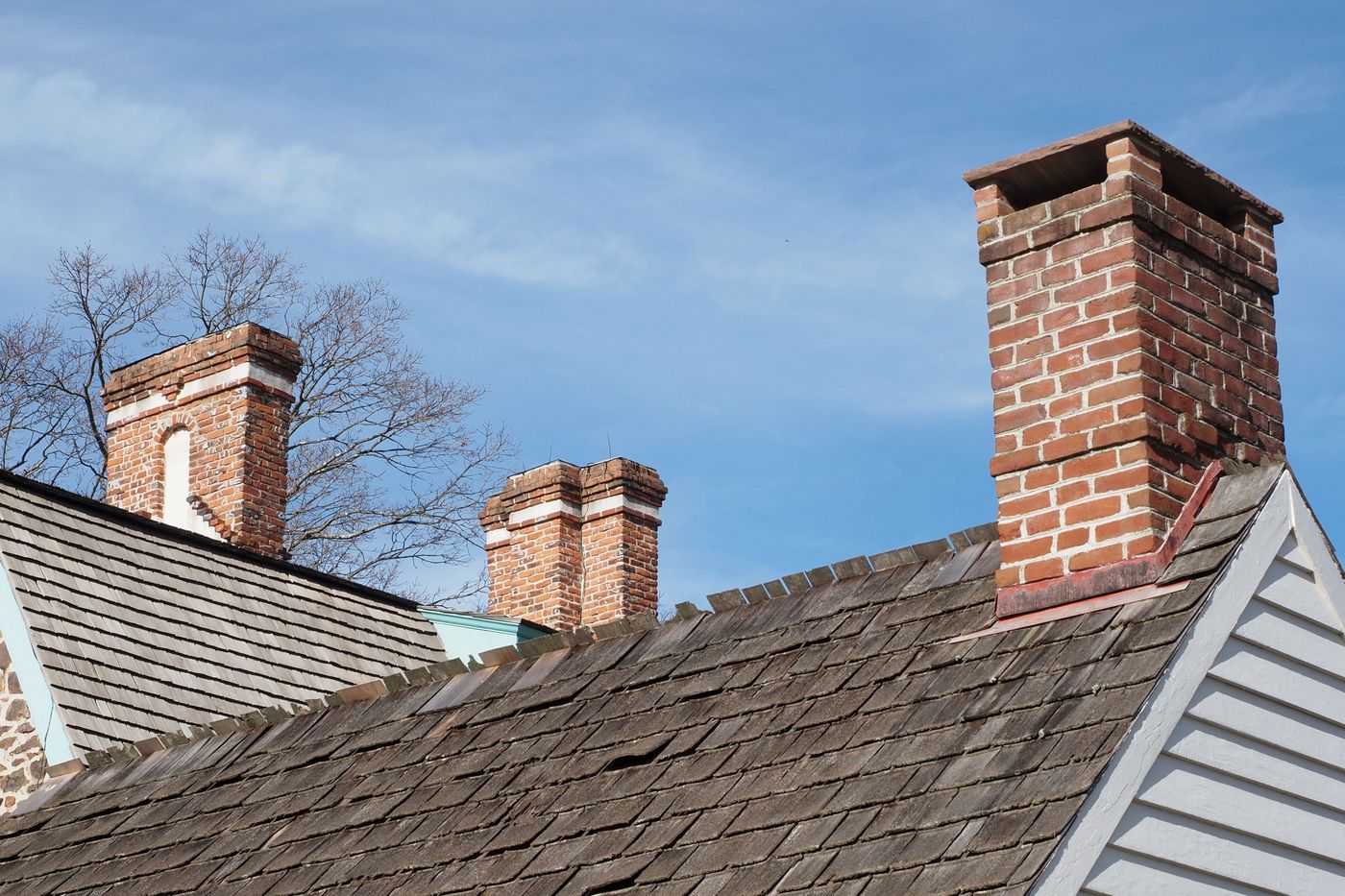
Where a chimney passes through a roof, two structures that move differently have to share a waterproof joint. How that joint gets built depends almost entirely on the roof around it — and South Florida homes mix barrel tile, flat decks and shingles more than almost anywhere. Understanding the differences explains a lot about why some chimneys leak and some never do.

Flashing is a layered metal system, not a bead of goop. A base layer ties into the roof surface and turns water away from the chimney's sides; a counter layer, let into the masonry above it, laps over the base so that gravity does the sealing. Done correctly, water arriving from any direction is handed off, layer to layer, back onto the roof and away. Done as a single piece with sealant smeared over the gaps, it works until the first summer the sealant gives up.
The joint also has to tolerate movement. Roof decks flex with wind and heat; masonry barely moves at all. The two-layer design absorbs that difference because the layers can shift slightly against each other without opening a path for water. This is why flashing details that look fussy are actually the whole point: each fold and overlap exists to keep the assembly watertight while everything around it expands, contracts and shudders through storm season. When storm rain arrives sideways off the bay, shortcuts here get found out quickly.
Tile roofs rule the rooflines across south Miami-Dade, and they complicate flashing in a specific way: the tile is not the waterproof layer. The membrane beneath it is, and the tile mostly shields that membrane while shedding the bulk of the rain. Flashing around a chimney on a tile roof must integrate with both — the buried membrane and the sculpted, wavy surface above it. Shaping metal to follow barrel profiles without leaving gaps takes patience and experience, which is why tile flashing failures usually trace back to somebody's shortcut.
Tile adds a logistics problem too: reaching the flashing means lifting tiles without cracking them, and matching replacements for older profiles can take real hunting. This tempts people into surface-only repairs — mastic troweled around the chimney base over the tile — which reads as fixed but leaves the actual waterproofing untouched below. If a tile-roof chimney leaks, the honest repair opens the area properly, reworks the layers underneath, and re-lays the tile. Anything less is a countdown to the next ceiling stain.
Flat roofs — common on mid-century South Florida homes and additions — trade tile's complexity for a harsher water condition: rain does not rush off, it lingers. Ponding water near a chimney base will probe every seam for as long as it sits there. Flashing here is typically a membrane-based detail, with the roofing material itself turned up against the chimney and terminated into the masonry, rather than shaped metal alone. The termination line is everything; if water can get behind it, the whole detail is compromised.
Slope and drainage around the chimney matter as much as the flashing itself. A well-built flat-roof detail includes tapered buildup that steers water away from the base so nothing ponds against the joint. On older homes, decades of re-coating can bury the original detail under layers that each moved differently, which is why leaks on flat roofs are often archaeology projects. The durable fix cuts back to something sound and rebuilds the detail cleanly rather than adding one more layer of hope.
Shingle roofs, more common on some streets than others here, are the textbook case: step pieces woven into each shingle course, with counter flashing set into the brick above. The material rhythm makes the work methodical, and failures usually come from age or from fasteners driven through the wrong spot. Plenty of local homes mix systems — tile on the main house, flat over the addition — and a chimney near that transition inherits the hardest flashing problem on the roof, where two drainage logics meet.
The best moment to get flashing right is during a reroof, and it is also the moment most flashing gets ruined. Reroofing that reuses tired counter flashing, or leans on sealant where layers should overlap, builds a future leak into a brand-new roof. If a reroof is coming, have the chimney's flashing plan settled with the roofing work in advance — and have the masonry side of the joint reviewed in the same visit, because a fresh roof against crumbling joints solves only half the problem.
Free written estimate · Upfront pricing · Same-day service available
Reroofs frequently reuse old counter flashing or rely on sealant at the chimney. The new surface sheds water beautifully everywhere except the one joint that was not rebuilt. That detail needs to be opened and done properly.
Very. On tile, the true waterproofing is the membrane under the tile, so the flashing must integrate at that layer and also fit the tile's shape above. Shingle flashing is woven into the courses directly.
Rarely for long. Sealant ages fast in South Florida sun and rain, and it cannot substitute for overlapping layers. Treat it as a patch, not a repair.