Chimney Waterproofing in Miami, Florida
No-nonsense chimney waterproofing for Miami: honest assessments, meticulous work, appointments honored.
- Family-Owned & Operated
- Free Written Estimates
- Upfront Pricing
- Same-Day Service Available
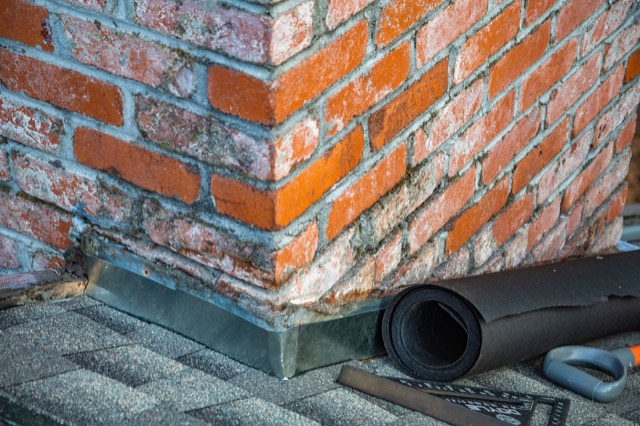
A South Florida chimney spends eleven months as pure weather armor and one month as a fireplace. Our chimney waterproofing in Miami reflects that ratio, the emphasis goes to the crown, cap, flashing, and mortar that keep rain out, because in this climate the failures that matter almost always start with moisture, not flames.
Masonry chimneys absorb rainwater through brick faces and mortar joints, and in a wet climate that absorption drives spalling, efflorescence, rusted dampers, and interior stains. Our waterproofing service applies vapor-permeable silane and siloxane repellents that sharply cut absorption while letting existing moisture escape, never film-forming sealers that trap it. Needed repairs are identified and completed first, the masonry is cleaned and prepped, and a before-and-after water test verifies the treatment took.
Shenandoah got its name from the Virginia developers who started laying it out in 1919, and plenty of the houses from its first building boom are still standing. Most of Miami is apartments and condos with no chimney at all. The fireplaces are in the older single-family neighborhoods: Shenandoah has a large stock of 1920s and 1930s revival houses, and Silver Bluff was built out in waves through the 1920s, 30s and 40s. The banyans along Coral Way and the old shade trees in these neighborhoods drop leaves and seed pods onto a lot of roofs. It's a detail out-of-town outfits miss, and one Miami homeowners feel first.
Why Miami Homes Call Us for Chimney Waterproofing
A chimney in full sun and a chimney under Miami's canopy age on different schedules. The shaded one holds moisture longer, grows green film on its north side, and gives its mortar fewer drying hours between storms. When we evaluate a canopy-covered stack, that slower drying cycle shapes everything from the sealer we choose to the maintenance rhythm we suggest. It's the single biggest factor we plan around when we take on chimney waterproofing in Miami.
Mortar has a working lifespan, and much of it in this part of Miami-Dade was mixed when these neighborhoods were new. Once joints wear down ahead of the surrounding brick, water gets a path into the stack. Repointing with a properly matched mortar, not smearing new over old: restores Miami chimneys the way they were built to be maintained. Around Miami, ignoring that reality is how small chimney waterproofing jobs turn into big ones.
Salt air is patient. It settles on caps, chase covers, and flashing lines, then goes to work: slowly at first, then suddenly, when a rusted-through seam starts letting water into the chase. Homes in Miami live with this cycle year-round, which is why coastal-grade materials like stainless steel earn their cost here many times over. That local context is why chimney waterproofing in Miami rarely looks like the textbook version.
What Our Chimney Waterproofing Covers
- Breathable silane and siloxane repellents
- No film-forming sealers that trap moisture
- Efflorescence cleaned before treatment
- Crown treated along with the brick
If you caught yourself nodding at any point on this page, act on it. The gap between a small chimney repair and a large one in Miami is usually just time. Call, describe what you've seen, and you'll get a straight answer about whether it warrants a look.
As a family-owned and operated business, we keep the process personal by design. Every job opens with a written estimate at no cost, every line of scope comes with its reasoning attached, and a real person answers the phone.
Chimney Waterproofing nearby: we also serve Key Biscayne, Coconut Grove, Coral Gables, West Miami, Coral Terrace, South Miami.
A Closer Look



Chimney Waterproofing in Miami, handled.
Free written estimate · Upfront pricing · Same-day service available
Frequently Asked Questions
Will waterproofing stop my chimney leak?
Not by itself, and we will not sell it that way. Active leaks usually originate at the crown, the flashing, or failed joints, and those need repair first. Waterproofing is the step after the repair: it keeps the masonry from re-saturating and stretches the life of the fix.
How often does the treatment need to be redone?
Quality silane and siloxane repellents keep working for years even under South Florida rainfall, though sun-baked and windward faces give out sooner than sheltered ones. We record the product and application date for you, and a quick water test on the brick tells you when it is time again.
Do you handle chimney waterproofing throughout Miami?
Yes. Miami is part of our core Miami-Dade County service area, and same-day visits are often available. Call (786) 462-9144 and we will give you an honest arrival window.
My Miami home's fireplace has sat idle for years. Is service still worth it?
Definitely. The weather never learned your fireplace was retired, the stack has been catching rain, wind, and humidity the entire time, and an open flue under our tree canopy has been quietly collecting whatever fell in. Before the first match this winter, a checkup tells you what those idle years actually did.
Breathable Repellent, and Why Sealer Is the Wrong Word
Masonry has to breathe. A film-forming sealer traps the moisture already inside the brick, and in this climate there is always moisture inside the brick. Trapped water freezes nowhere near here, but it does carry salt to the surface, and the crystals that form behind the face are what push it off.
What works is a breathable siloxane repellent: it lines the pores so liquid water cannot enter but vapor can still leave. Applied correctly it is invisible, and it does not change the color of the brick.
Sequence matters more than product. Repellent goes on after the crown, the joints and the flashing are sound, never before. Sealing a wall that is still taking water through a cracked crown just locks the water in.
Coverage rate is the part that separates a repellent that works from one that does not. These products are applied to saturation, wet-on-wet, until the masonry stops taking it, which uses far more material than a single thin coat. A chimney sprayed once and called done has been decorated rather than protected.
Expect it to be reapplied. Depending on exposure a good repellent gives several years, not a lifetime, and any warranty longer than that is describing the label rather than the wall.
What Miami's Distance From the Water Changes
Miami sits about 2 miles from Biscayne Bay, which puts it in the first band of real salt exposure. Air off the bay reaches these rooflines every day it blows onshore, and it carries chloride whether or not you can taste it.
That distance is the single biggest thing deciding what the repellent is actually holding back when we quote chimney waterproofing here, because salt-bearing moisture crystallizing behind the brick face. It is the reason two chimneys of the same age, built the same way, need different work depending on which side of Miami-Dade County they stand on.
Our base is about 10 miles away in Pinecrest, and Key Biscayne, Coconut Grove and Coral Gables are the closest communities to Miami that we also cover. If a job here needs a second visit, it is arranged the same way as the first.
What that means practically: when we quote chimney waterproofing in Miami we price what this exposure actually does to a chimney, not a national average. A specification that makes sense fifteen miles inland can be the wrong answer here, and the reverse is just as true.
Weighing whether to look now or wait? At 2 miles out, the exposure answers that for you. Miami damage compounds on a schedule set by how much salt and moisture reach the stack, and the cheapest chimney waterproofing anybody books is the one booked before the water has finished finding its way in. A written estimate costs nothing and tells you which version of the job you are looking at.
Hiring for Chimney Waterproofing in Miami: Six Things to Ask
Search for chimney waterproofing from a Miami address and you get a page of results, most of which are nowhere close to you. Some are lead brokers who will sell your number on. Some are franchises whose nearest van is in another county. A few are actually local. Telling them apart takes about two minutes on the phone.
Ask where they are based, and listen for a place rather than a region. We are in Pinecrest, about 10 miles from Miami, and Key Biscayne and Coconut Grove are its nearest neighbors on our map. That is a checkable answer. "We serve all of South Florida" is not.
Ask whether the estimate is written on site by someone who has looked at the chimney. A price given without a look is a sales document, and on a Miami roof the scope tends to move once somebody is actually up there.
For chimney waterproofing specifically, ask whether the chimney is even ready to be treated. Repellent over an open crown seals the water in rather than out, and the answer tells you in one sentence whether somebody has actually looked or is reading off a price list.
Ask for the chimney waterproofing estimate in writing before anything begins. Not a number over the phone and not a figure on the back of something. A written scope is what turns a change order into a conversation rather than a surprise, and it costs nothing to ask for.
Finally, ask what happens if they find something worse once they are on the roof. Every Miami chimney hides its condition until something comes apart, so the honest answer is never "that will not happen". It is an agreement on how it gets priced when it does.
Your Miami team, based in Pinecrest
Our base is in Pinecrest, about 10 miles from Miami. That is the whole pitch: we are close enough that a second look, if something needs one, is a short drive rather than a scheduling problem.
Call about your Miami home and a real person answers. The estimate is written on site by the person who comes out, and nobody quotes a job they have not looked at. We are family-owned, a real person answers the phone, and every visit starts with a free written estimate.
Helpful Local Guides
All guides →What Is Tuckpointing a Chimney? Not the Same as Repointing
Tuckpointing is a finishing technique that uses two different mortars in the same joint so that…
Read →GuideHurricane Season Chimney Prep for South Florida
Between June and November, a chimney absorbs the full brunt of South Florida's weather. A…
Read →GuideWhy Is My Chimney Cap Rusting? Salt Air in South Florida
Pinecrest sits close enough to Biscayne Bay that the sea breeze carries a fine mist of salt…
Read →