Chimney Relining in Miami, Florida
Miami homeowners get the same attention we give our own neighborhood, that's the standard on every chimney relining visit.
- Family-Owned & Operated
- Free Written Estimates
- Upfront Pricing
- Same-Day Service Available
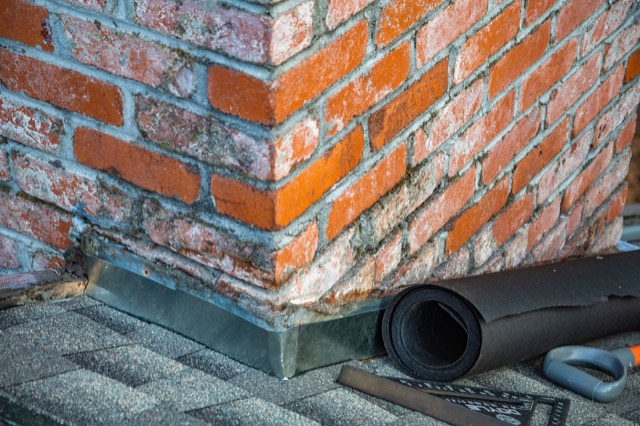
Three signs are worth a call in Miami: orange streaks bleeding down a chase, a white mineral crust spreading across brick, and a damp odor indoors after heavy rain. Different symptoms, one culprit, water in the wrong place. Every chimney relining visit begins by tracing that water to its entry point, because fixing the symptom without the source just resets the clock.
Chimney relining installs a new, correctly sized liner inside an existing flue, restoring a sealed path for smoke and combustion gases without rebuilding the chimney. It is the standard fix for cracked clay flue tiles, eroded joints between tiles, and older masonry chimneys that were never lined at all. An insulated stainless steel system resists corrosion in humid coastal air, keeps flue gases hot for a stronger draft, and shields the surrounding brick and framing from heat and moisture.
Shenandoah got its name from the Virginia developers who started laying it out in 1919, and plenty of the houses from its first building boom are still standing. Most of Miami is apartments and condos with no chimney at all. The fireplaces are in the older single-family neighborhoods: Shenandoah has a large stock of 1920s and 1930s revival houses, and Silver Bluff was built out in waves through the 1920s, 30s and 40s. The banyans along Coral Way and the old shade trees in these neighborhoods drop leaves and seed pods onto a lot of roofs. It shapes both what we check and what we recommend for chimney relining here in Miami.
Why Miami Homes Call Us for Chimney Relining
Builder-grade galvanized steel was never meant for life this close to the bay. All over Miami we find chase covers and caps that surrendered a decade early, announcing themselves with orange streaks running down the siding. Replacing that failing galvanized metal with stainless or copper is one of the highest-value moves a homeowner near the water can make. It's the single biggest factor we plan around when we take on chimney relining in Miami.
To the wildlife commuting through Miami's tree cover, an open flue reads as a furnished apartment, and to the canopy above it, a convenient wastebasket. Leaves, rain, squirrels, the occasional raccoon: all of it ends up inside uncapped chimneys here. Given how modest the fix is compared to what it prevents, cap condition is the very first thing we look at. For chimney relining calls in Miami, that backdrop is usually where the story starts.
Age alone tells you nothing definitive about a chimney. Miami has sixty-year-old stacks in excellent shape and twenty-year-old ones in trouble. What age does guarantee is that components are somewhere along their service curves: mortar, crown, flue tiles, damper, each aging at its own pace. A careful evaluation locates each one on that curve and converts guesswork into a plan. Around Miami, ignoring that reality is how small chimney relining jobs turn into big ones.
Chimney Relining: What You Get
- Corrosion-resistant materials for humid coastal air
- Written no-cost estimates before work starts
- Workmanship warranty on every reline
- Insulated stainless steel liner systems
Whether this is urgent or just long overdue, the next step is the same: call us. We'll schedule your Miami visit, walk the situation with you on-site, and make sure you finish the visit with a clear read on where things stand.
Our workmanship warranty stands behind every finished job, and a no-cost written estimate opens every new one. Findings, recommendation, and price are all on paper before a single tool leaves the truck.
Chimney Relining nearby: we also serve Key Biscayne, Coconut Grove, Coral Gables, West Miami, Coral Terrace, South Miami.
A Closer Look


Chimney Relining in Miami, handled.
Free written estimate · Upfront pricing · Same-day service available
Frequently Asked Questions
Does my chimney need a full reline or just a spot repair?
That depends on the extent of the compromise. Isolated damage high on the stack can sometimes be corrected locally, but cracked tiles scattered along the flue, missing mortar between tiles, or a chimney with no liner at all calls for a continuous new liner. We evaluate the full flue first and spell out exactly what we found in a free written estimate.
Will a new liner improve my fireplace's draft?
In most cases, yes. A liner sized correctly to the fireplace opening and insulated to keep flue gases hot creates a steadier column of rising air, which means smoke rises instead of rolling into the room. Oversized, leaky flues rank among the most frequent draft problems we find in older Pinecrest chimneys.
Do you handle chimney relining throughout Miami?
Yes. Miami is part of our core Miami-Dade County service area, and same-day visits are often available. Call (786) 462-9144 and we will give you an honest arrival window.
Do chimneys in Miami really need attention in a warm climate?
They do. Warmth was never the enemy. In Miami the chimney's real adversaries are rain, salt-tinged humidity, and half a year of storm winds, all working on the masonry and metal whether or not a fire ever burns. Even a fireplace used a handful of evenings each winter depends on a dry, structurally sound stack the other 350 days.
Why a Liner Fails Here, and What Replaces It
The liner is the part of a chimney that does the actual containment work, and on most housing of a certain age it is clay tile. Clay is durable and cheap and it has one weakness: it cracks when it moves, and it moves when the masonry around it moves.
Decades of humidity, storm loading and thermal cycling open the joints between tiles and offset the sections. Once that happens the flue is no longer a sealed path, and combustion products and moisture reach the masonry directly. The symptoms show up as staining on the outside of the stack, or as a smell that gets worse in the wet months.
A stainless liner is the usual replacement because it is a single continuous run with no joints to open. Grade matters more here than most places: on a chimney taking salt air, a liner and a cap in an appropriate stainless grade are the difference between a thirty-year component and a ten-year one.
Sizing decides whether the fireplace works afterwards. A liner that is too large for the appliance cools the flue gases and kills the draft; too small and it restricts. The flue is sized to the appliance and the opening, not to whatever diameter is convenient.
Relining is also the point at which the crown and the cap get sorted, because they are all part of the same assembly and there is no sense putting a new liner under a crown that is letting water into the joint.
What Miami's Distance From the Water Changes
Miami sits about 2 miles from Biscayne Bay, which puts it in the first band of real salt exposure. Air off the bay reaches these rooflines every day it blows onshore, and it carries chloride whether or not you can taste it.
That distance is the single biggest thing deciding which stainless grade the liner needs when we quote chimney relining here, because grade decides whether it is a thirty-year component or a ten-year one. It is the reason two chimneys of the same age, built the same way, need different work depending on which side of Miami-Dade County they stand on.
Our base is about 10 miles away in Pinecrest, and Key Biscayne, Coconut Grove and Coral Gables are the closest communities to Miami that we also cover. If a job here needs a second visit, it is arranged the same way as the first.
What that means practically: when we quote chimney relining in Miami we price what this exposure actually does to a chimney, not a national average. A specification that makes sense fifteen miles inland can be the wrong answer here, and the reverse is just as true.
Weighing whether to look now or wait? At 2 miles out, the exposure answers that for you. Miami damage compounds on a schedule set by how much salt and moisture reach the stack, and the cheapest chimney relining anybody books is the one booked before the water has finished finding its way in. A written estimate costs nothing and tells you which version of the job you are looking at.
Hiring for Chimney Relining in Miami: Six Things to Ask
Search for chimney relining from a Miami address and you get a page of results, most of which are nowhere close to you. Some are lead brokers who will sell your number on. Some are franchises whose nearest van is in another county. A few are actually local. Telling them apart takes about two minutes on the phone.
Ask where they are based, and listen for a place rather than a region. We are in Pinecrest, about 10 miles from Miami, and Key Biscayne and Coconut Grove are its nearest neighbors on our map. That is a checkable answer. "We serve all of South Florida" is not.
Ask whether the estimate is written on site by someone who has looked at the chimney. A price given without a look is a sales document, and on a Miami roof the scope tends to move once somebody is actually up there.
For chimney relining specifically, ask how the liner is being sized. Too large kills the draft, too small restricts, and the fireplace opening decides it, and the answer tells you in one sentence whether somebody has actually looked or is reading off a price list.
Ask for the chimney relining estimate in writing before anything begins. Not a number over the phone and not a figure on the back of something. A written scope is what turns a change order into a conversation rather than a surprise, and it costs nothing to ask for.
Finally, ask what happens if they find something worse once they are on the roof. Every Miami chimney hides its condition until something comes apart, so the honest answer is never "that will not happen". It is an agreement on how it gets priced when it does.
Your Miami team, based in Pinecrest
Our base is in Pinecrest, about 10 miles from Miami. That is the whole pitch: we are close enough that a second look, if something needs one, is a short drive rather than a scheduling problem.
Call about your Miami home and a real person answers. The estimate is written on site by the person who comes out, and nobody quotes a job they have not looked at. We are family-owned, a real person answers the phone, and every visit starts with a free written estimate.
Helpful Local Guides
All guides →Unused Chimney Problems: What Happens While It Sits
By June, most fireplaces in Pinecrest have been cold for months, and it is tempting to assume…
Read →GuideRemodeling Around a Fireplace: What to Decide First
Renovation energy usually goes to kitchens, baths and floor plans, and the fireplace gets…
Read →GuideSigns a Chimney Liner Needs Replacing in South Florida
The signs a chimney liner needs replacing are mostly small and easy to explain away. They…
Read →